 Reviews


 Proudly American


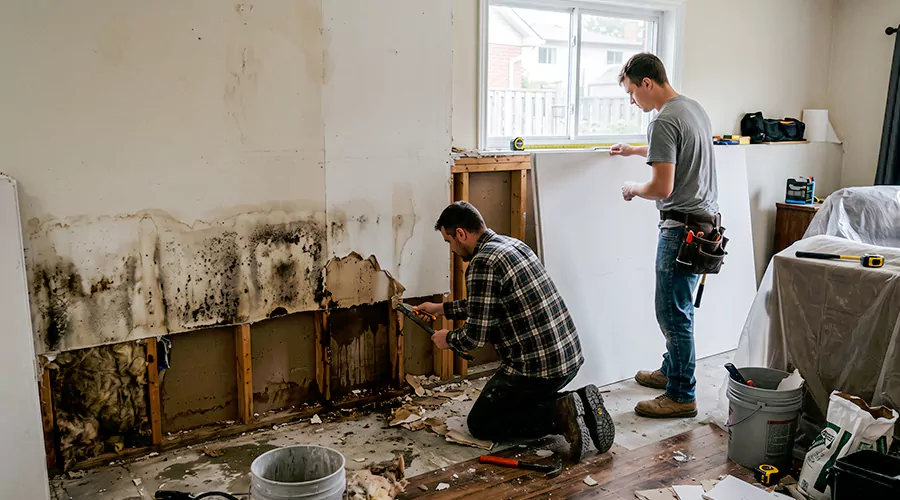
Drywall that has directly absorbed sewage usually needs to be removed because the paper facing and gypsum core are porous and difficult to clean thoroughly after contaminated water exposure. Drywall above the affected area may remain when it stayed dry and has no evidence of contamination.
A sewage backup is different from a clean plumbing leak. During sewage backup cleanup, the decision is based on contamination and moisture rather than appearance alone.
Why Is Sewage-Contaminated Drywall Hard to Save?
Drywall absorbs water quickly through its paper surface and exposed edges. Sewage can carry microorganisms and organic contamination into those porous layers. Wiping the painted face does not necessarily reach what entered the board. Commercial sewage damage cleanup therefore treats affected drywall more cautiously than material exposed to clean water.
Replacement becomes more likely when:
- Sewage touched the paper facing.
- Water entered the bottom edge.
- The board feels soft or swollen.
- Contamination reached the backside.
- Insulation behind the wall became wet.
- A strong sewage odor remains.
Does Every Wall in the Room Need to Be Removed?
No. Removal should follow the actual affected area rather than assuming every wall needs demolition. Drywall that remained dry and was not contaminated may be left in place.
| Drywall Condition | Typical Response |
|---|---|
| Dry and above contamination | Usually leave in place |
| Surface nearby but not contacted | Clean surrounding hard finishes |
| Direct sewage contact | Remove affected drywall |
| Soft or swollen drywall | Remove |
| Contaminated backside | Remove affected section |
| Mold growth after backup | Evaluate for removal |
The goal is selective removal of material that cannot be safely retained.
What Happens When Sewage Wicks Up Drywall?
Drywall can pull liquid upward through capillary action. The visible water line may therefore underestimate how much of the panel became wet.
Watch for:
- Darkening near the floor
- Soft paper facing
- Swollen lower edges
- Bubbling paint
- Loose baseboards
- Persistent sewage odor
- Elevated moisture readings
- Staining above the original water line
The removal boundary should account for moisture above the obvious contamination rather than only the floor-level stain.
What Happens to Insulation Behind the Drywall?
Insulation can hold contaminated water against framing after visible sewage has been extracted. Absorbent insulation may need removal when it has direct sewage exposure. Opening affected drywall also allows the wall cavity to be cleaned and dried.
Sewage backup cleanup may involve:
- Removing contaminated drywall
- Taking out affected insulation
- Cleaning exposed framing
- Disinfecting suitable hard surfaces
- Drying the wall cavity
- Checking moisture before rebuilding
New drywall should not be installed while framing remains wet.
Can Painted Drywall Be Disinfected Instead?
Paint can make the front surface less absorbent, but it does not make the entire panel nonporous. Water can enter through seams or the bottom edge and reach the paper backing. For that reason, disinfecting the visible paint is not enough when sewage has soaked into the board. A small splash on an intact painted surface is different from drywall that sat in contaminated water. The amount of contact and whether liquid penetrated the panel both matter.
How Quickly Should Wet Drywall Be Addressed?
Contaminated material should be addressed promptly after the backup source is stopped. Delays allow moisture to move farther into the wall assembly. Wet building materials should begin drying within about 24 to 48 hours when possible. Sewage contamination still requires appropriate removal decisions even when drying starts quickly. Emergency sewage cleanup can reduce how much surrounding material becomes affected.
What Warning Signs Mean the Wall Has Hidden Damage?
Hidden contamination is possible when the wall looks better after surface cleanup but odor or moisture remains.
Watch for these signs:
- The wall stays damp.
- A sewage smell returns.
- Paint continues bubbling.
- Baseboards swell.
- Mold appears near the floor.
- Moisture readings stay elevated.
- The opposite side becomes stained.
- Flooring beside the wall stays wet.
Sewage damage restoration can expand when contamination reaches both the wall and floor assembly.
What Can You Safely Check Yourself?
You can inspect the wall without cutting it open. Start with a visual check and use a moisture meter suited to drywall if one is available.
Follow these steps:
- Mark the highest visible stain.
- Check for softness without pressing hard.
- Compare moisture with a dry wall.
- Inspect the baseboard for swelling.
- Note any persistent odor.
- Repeat the moisture check the next day.
Do not remove outlet covers in a wet wall or cut into drywall where electrical wiring may be present.
When Should You Call a Professional?
Professional sewage cleanup is appropriate when wastewater soaked drywall or entered a wall cavity. Electrical exposure adds another reason to avoid DIY demolition.
Seek professional assessment when:
- Several walls were contaminated.
- Sewage reached outlets.
- Insulation is wet.
- The wall cavity smells strongly.
- Mold is already visible.
- The affected boundary is unclear.
- Wastewater spread through several rooms.
Professional evaluation can help limit removal to the areas that actually need it.
How Can the Wall Be Rebuilt Safely?
Reconstruction should begin only after contamination is removed and the remaining wall cavity is dry.
A typical rebuild sequence is:
- Confirm the backup source is repaired.
- Remove contaminated material.
- Clean exposed structural surfaces.
- Dry framing completely.
- Verify moisture conditions.
- Install replacement insulation when needed.
- Hang and finish new drywall.
Covering damp framing can create another moisture problem behind the new wall.
Conclusion
Drywall that directly absorbs sewage usually needs replacement because contaminated water can penetrate its porous paper and gypsum core. Dry sections outside the affected area do not automatically need removal. The safest approach is to define the contaminated boundary and dry the exposed cavity before rebuilding. If sewage reached insulation or electrical components, professional assessment can help determine the correct removal scope.
Frequently Asked Questions
Can sewage be cleaned off painted drywall?
A minor surface splash may be cleanable when it did not penetrate the board. Saturated drywall is usually removed.
How much drywall should be removed after a sewage backup?
The removal boundary should follow contamination and moisture rather than an arbitrary height.
Does wet insulation behind drywall need replacement?
Insulation directly contaminated by sewage often needs removal because it is difficult to clean thoroughly.
Can drywall be dried instead of replaced?
Drying alone is not enough when sewage has penetrated the material. Clean-water exposure is evaluated differently.
Can mold grow after a sewage backup?
Yes. Mold can develop when remaining materials stay damp.
When can new drywall be installed?
New drywall should wait until the cavity has been cleaned and the remaining materials are dry enough to close safely.